
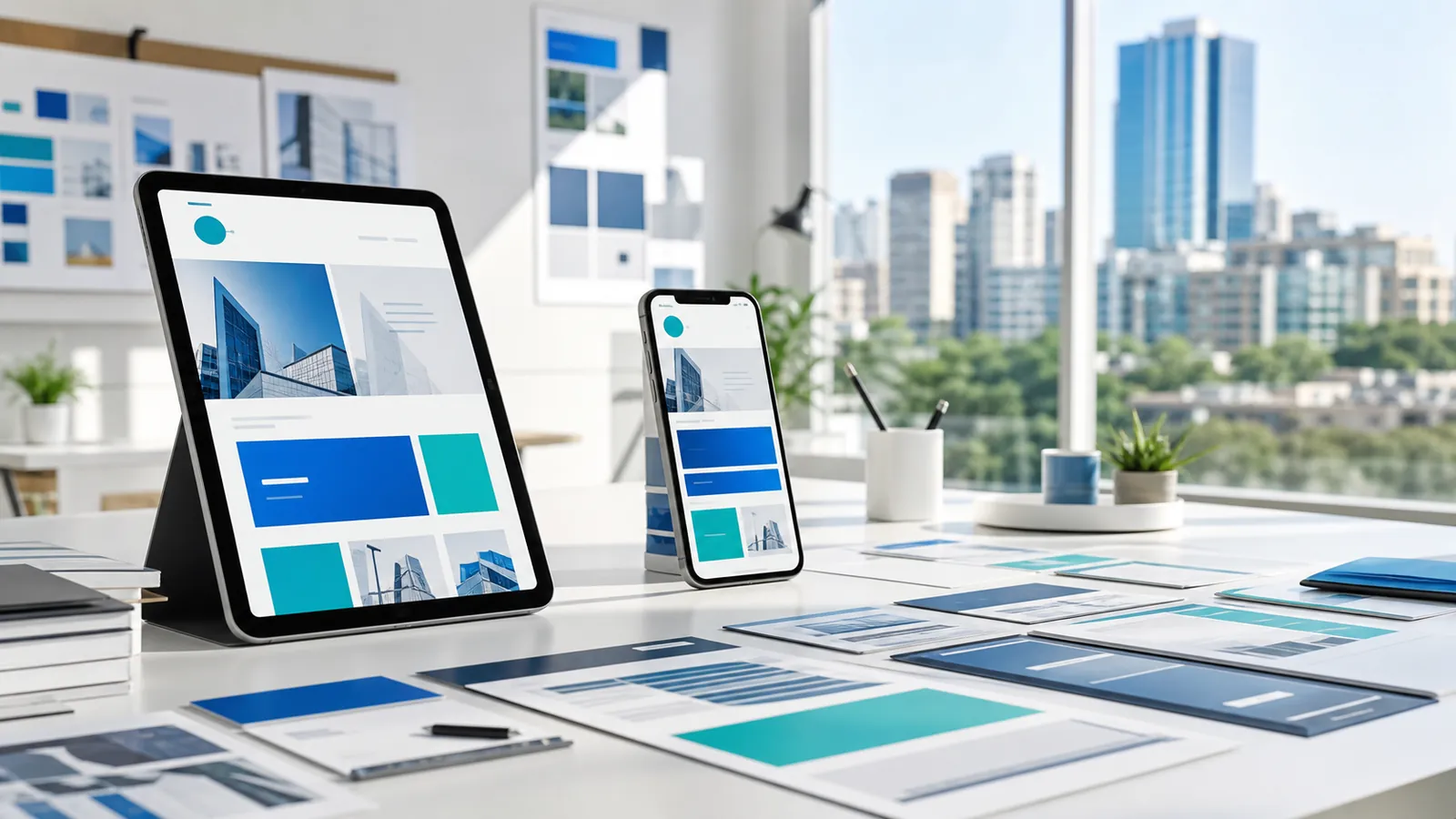
Most local buying journeys now begin on a phone. Mobile-first design gives the smallest screen priority so essential information and actions never feel secondary.
Start with customer intent
A service visitor may want pricing context, proof, directions or a quick conversation. Put these high-intent paths before decorative content.
Make every interaction thumb-friendly
Buttons, navigation, forms and filters need comfortable spacing and predictable behaviour across common mobile widths.
Reduce visual and technical weight
Focused layouts, compressed media and disciplined animation help pages feel immediate even on inconsistent mobile networks.
Test the complete enquiry journey
Review the real path from Google result to landing page, form, WhatsApp and confirmation instead of testing isolated screens.